
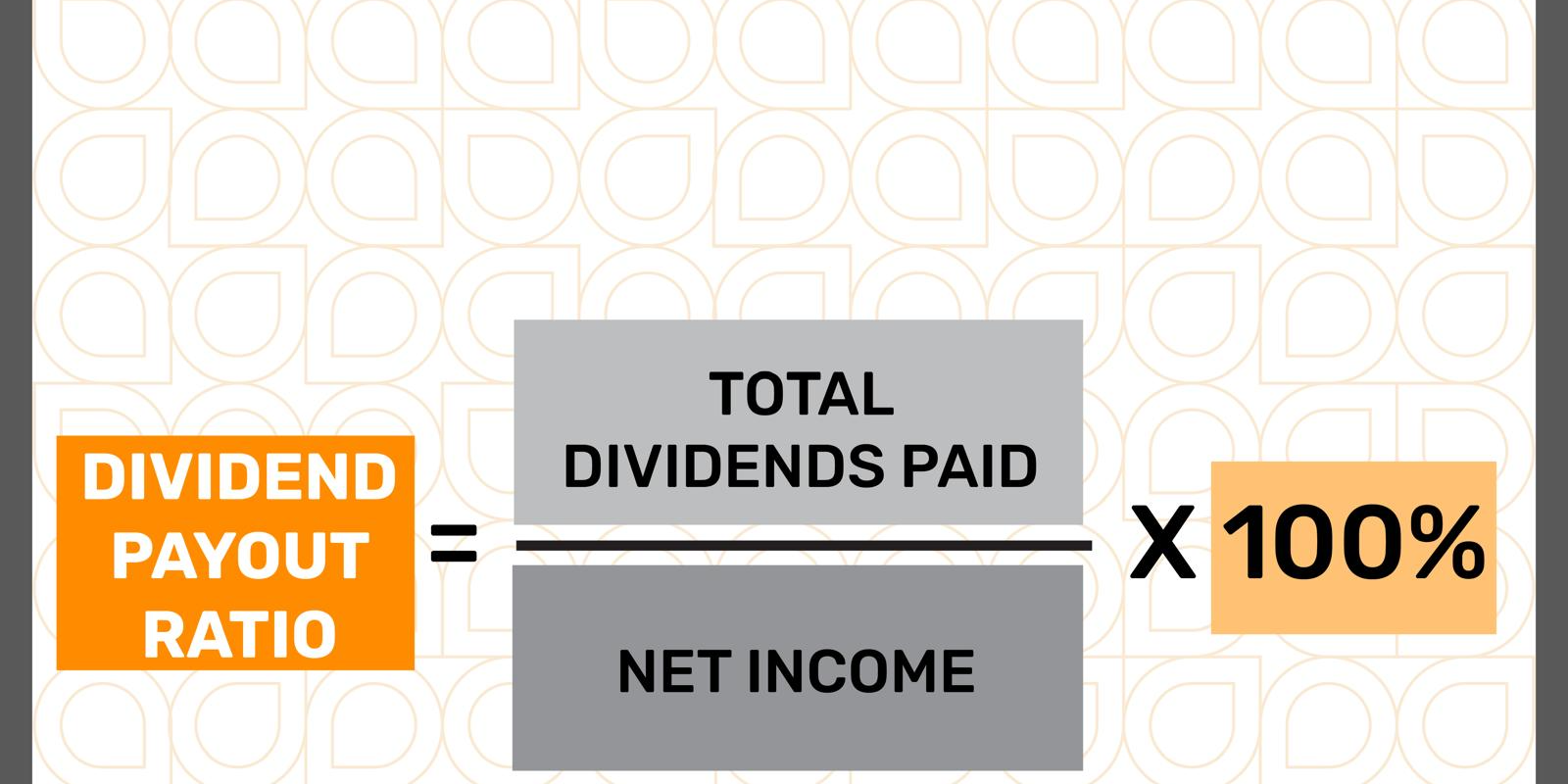
The dividend payout ratio measures the proportion of a company’s net income that is distributed to its shareholders through dividends.
Formula for “Dividend Payout Ratio” = (Total Dividends Paid / Net Income) × 100%
Dividend payout ratio can also be calculated as follows:
Dividend Payout Ratio = (Dividend Per Share (DPS)/ Earnings Per Share (EPS)) × 100
Why Is the Dividend Payout Ratio Important?
The dividend payout ratio is important because it might give an idea about a company’s financial health and stability, because, a balanced dividend payout ratio shows a company’s ability to reward shareholders while also giving importance for growth. When investors see too high dividend payout ratio, they may see it as a signal of risk, and when it is too low, it shows a lack of shareholder returns.
What is Dividend Sustainability?
Dividend sustainability is an indicator of whether a company can continue to pay its current profit payments (dividends) in the future. A company is considered sustainable if it can ensure the payment of profits, cash flow, and debt, and if dividends can be paid without releasing structural or financial risks. In short, it assesses whether dividends are secure and sustainable over the long term.
How Do You Calculate the Dividend Payout Ratio?
The dividend payout ratio is calculated by dividing the total dividends paid in a year by a company’s annual net income. In other words, it shows in percentage terms how much of a company’s earnings are distributed to shareholders as dividends.
Calculating the Dividend Payout Ratio in Excel
If you are using Excel to calculate the dividend payout ratio, here is the basic steps that you can follow:
- Enter “Total Dividends Paid” in cell B1
- Enter “Annual Net Income” in cell C1
- Dividend Payout Formula = B1/C1
- To display the result as a percentage, select the cell with the formula, go to the Home tab and click on the percent style (%) button.
How to Analyze Dividend yield?
Analyzing dividend yield is about understanding not just the number, but what it says about a company’s health and shareholder rewards. Here’s a concise guide:
1. Dividend Yield
- Formula: Dividend per Share ÷ Share Price
- Shows the return you get on your investment from dividends alone.
- High yield can be attractive, but unusually high yields may signal risk.
2. Payout Ratio
- Formula: Dividends ÷ Net Earnings
- Tells you what portion of profits is being paid out.
- A very high ratio may be unsustainable; a moderate ratio suggests balance.
3. Dividend Growth
- Look at historical trends: is the company increasing, stable, or cutting dividends over time?
- Consistent growth signals stability and management confidence.
4. Cash Flow Analysis
- Check if operating cash flow comfortably covers dividend payments.
- Profits alone don’t guarantee the company can pay dividends if cash flow is weak.
5. Industry and Economic Context
- Compare dividend yield with peers in the same sector.
- Consider the economic cycle; some industries are more volatile.
Example of the Dividend Payout Ratio
Calculation of dividend payout ratio for Company A
| Dividend Payout Ratio Calculation for FY23 | |
| Net Income (IQD) | 10,000,000,000 |
| Total Dividends Paid (IQD) | 4,000,000,000 |
| Number of Outstanding Shares (IQD) | 2,000,000,000 |
| Earnings Per Share (EPS) (IQD) | 5.000 |
| Dividends Per Share (DPS) (IQD) | 2.000 |
| Dividend Payout Ratio = (Total Dividends Paid / Net Income) x 100 | 40% |
| Dividend Payout Ratio = (DPS / EPS) x 100 | 40% |
The dividend payout ratio for Company A is 40%. This means that the company distributes 40% of its profit as dividends to shareholders while retaining the remaining 60% for reinvestment or other purposes. As a result, it indicates a balanced approach, rewarding shareholders while keeping some funds for growth.
When investing in companies listed on the Iraq Stock Exchange (ISX), investors who want to evaluate the dividend payout ratio will find that it is not readily available and must calculate this ratio themselves. The above example for Company A shows two different formulas for calculating the dividend payout ratio.
Low and High Dividend Yield
Dividend yield come in two flavors, each telling a different story about the company and its strategy:
Low Dividend Yates
- Typically less than 2–3% yield of the share price.
- Indicates the company is reinvesting most of its profits back into growth, R&D, or expansion.
- Common in fast-growing sectors like tech or biotech.
- Pros: Potential for capital gains; reinvestment may fuel future earnings.
- Cons: Less immediate income for investors relying on dividends.
High Dividend Yield
- Typically above 5–6% yield, sometimes much higher.
- Indicates the company is returning a large portion of its profits to shareholders.
- Common in mature, stable industries like utilities or consumer staples.
- Pros: Provides steady income, attractive for income-focused investors.
- Cons: Could be unsustainable if profits fall; very high yields may signal financial trouble.
In short, low dividends = growth focus, high dividends = income focus, and understanding which one fits your strategy is key.
What does a dividend payout ratio indicate?
The dividend payout ratio shows the percentage of profits a company distributes to its shareholders.
A higher dividend payout ratio (above 50-60%) indicates that the company prioritizes rewarding shareholders with dividends, while a lower ratio suggests that the company retains more of its earnings for reinvestment in expansion or to pay down debt.
A high payout ratio is typically seen in mature and stable companies, while a low payout ratio is more common for growth-oriented companies. It is worth noting that a dividend payout ratio exceeding 100% may not be sustainable in the long term. However, a balanced ratio indicates that the company is considering both shareholder returns and its financial strength. This ratio helps investors evaluate whether a company’s dividend policy aligns with its long-term growth prospects and their investment goals.
What does it mean if dividend payout ratio is less than 100%?
When companies decide to retain part of their profits for expansion while distributing a portion to shareholders, their dividend payout ratio will be less than 100%, meaning they don’t distribute all their profits as dividends. This can be viewed positively if the retained profits are used wisely by the company to fuel growth, which may lead to capital gains through an increase in share price.
Dividend Payout Ratio vs. Dividend Yield
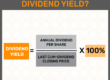
Dividend payout ratio and dividend yield both provide insights into a company’s dividend distribution; however, they measure different aspects. While the dividend payout ratio shows the percentage of a company’s annual net income that is paid out to shareholders as dividends; dividend yield shows the percentage of a company’s stock price that is returned to investors as dividends annually.
Why Do Companies Pay Dividends Instead of Reinvesting to the Company?
Companies sometimes prefer to pay dividends instead of reinvesting all their profits due to several strategic and financial reasons. The main reasons behind dividend distribution decisions are attracting and retaining investors, signaling financial health, limited growth opportunities, returning excess cash, maintaining market reputation, and balancing capital structure. Companies prefer to reinvest dividends mainly when they expand their operations, funding new products and investments and acquiring other companies.
FAQ
-
Is a High Dividend Payout Ratio Good?
To decided whether a high dividend payout ratio is good, several factors needs to be evaluated such as the company’s financial health, industry, and investor goals.
-
What Is the Difference Between the Dividend Payout Ratio and Dividend Yield?
The dividend payout ratio shows the percentage of a company’s annual net income that is paid out to shareholders as dividends; while dividend yield shows the percentage of a company’s stock price that is returned to investors as dividends annually.
-
What is the Ideal Payout Ratio?
The ideal payout ratio balances rewarding shareholders with keeping enough profit for growth. Generally, a payout ratio between 30% and 50% is considered healthy. Too high a ratio may be unsustainable, while too low could indicate the company isn’t sharing enough profit with investors. Mature companies often have higher ratios, while growth companies keep them lower.
-
Which is More Important, Dividend Yield or Dividend Yield?
Both matter, but in different ways. The dividend yield is the absolute dollar amount paid per share, while the dividend yield shows the return relative to the stock price. For income investors, yield is often more important, as it reflects actual returns on investment. For growth-oriented investors, the rate and growth trend may be more relevant.
-
Do Dividend Yield Vary by Sector?
Yes, dividend yield vary widely by industry. Mature, stable sectors like utilities, consumer staples, and telecom usually have higher dividend yield because cash flows are predictable. High-growth sectors like technology or biotech often have lower rates, as companies reinvest profits to fuel expansion rather than pay dividends.